
Ben Affleck’s AI company didn’t win on model quality. It won on domain expertise. In March, Netflix acquired InterPositive, the AI post-production startup Affleck founded in 2022 and ran in stealth. Netflix didn’t announce a price at first. Then, in July, its Form 10-Q settled it: roughly $587 million in cash, for a team of 16 engineers, researchers, and creatives.
In a recent interview on One More Question, Affleck walked through how the company came to exist. He never mentions the number. Instead, he describes a sequence that anyone building AI products in a specialized industry should study. A better model didn’t make InterPositive valuable. Knowing something about his industry did, and the people building the models had never thought to ask.

The 48-hour panic
Affleck isn’t a tourist here. He’d run a small visual effects company, “worked with GPUs a lot,” and can explain tensors and convolutional neural networks without notes. So when his VFX people told him Google and OpenAI were doing interesting work with transformers in video, he called and asked to see it.
After the demos, he called Matt Damon and told him, more or less, that they were finished. For a day or two, he believed they should rush out every movie they could, because the window was closing.
Then he did the part most people skip.
He looked at the data
He sat down with the engineering teams and examined how they had captioned the training data. Here’s what he found:
- The labs trained most video models on compressed clips scraped off the internet.
- The control wasn’t there. For example, ask the model to move the camera, and it might generate a camera inside the image.
- Generative models learn from paired examples, and the pairing in scraped video was inconsistent.
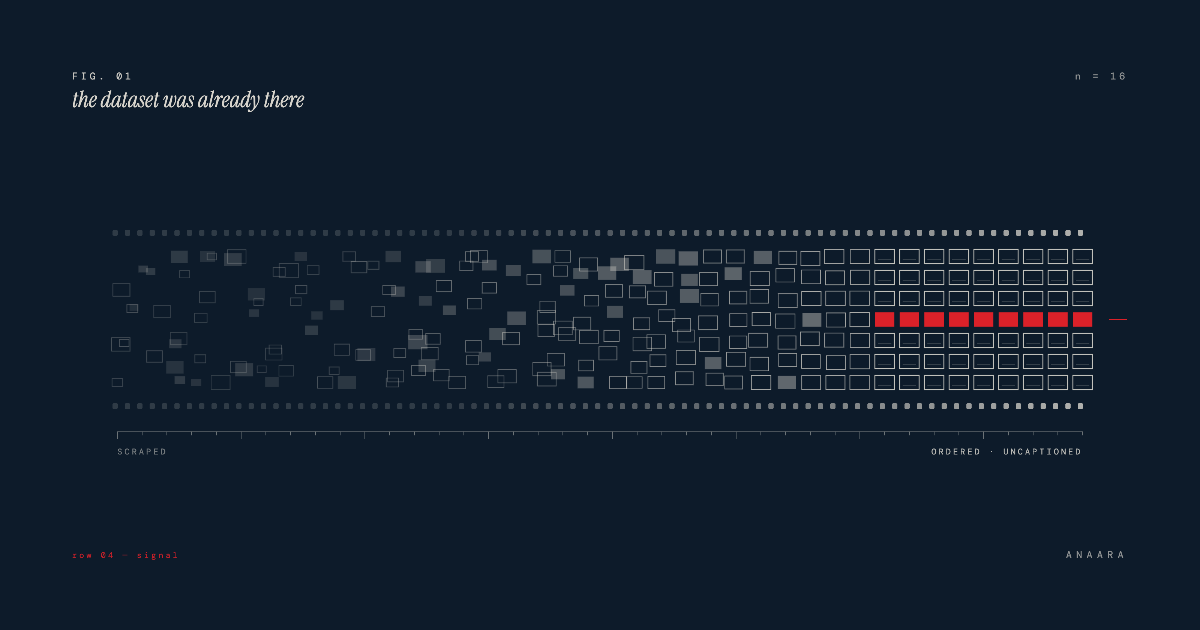
His conclusion was precise. This was “brilliant technology developed by brilliant researchers” who “had no understanding of the domain expertise of filmmaking.” In other words, nobody had realized that a film production already arrives as an ordered, structured dataset in its raw form. “You don’t even have to caption it.”
That single observation is the whole company. According to press coverage, InterPositive builds a model from a production’s own dailies and then uses it downstream for tasks like mixing, relighting, and visual effects. It isn’t general-purpose video generation. It’s one production, its own data, and a specific job.
Make the data. Don’t scrape it.
When the labs asked to buy his data, he told them: “We build data. You don’t have to just buy it. You can make it.” They said that wouldn’t be enough. Even so, he drew down his own capital and spent months manufacturing a dataset: cameras, LiDAR, location-specific devices, Unreal Engine, volume stages, patents.
His stated reason was ethical. He didn’t want to tell another filmmaker that his product had learned part of its intelligence from their work. “I was not comfortable with that. And I also realized you don’t have to do that.”
He also turned down the partnership offers, because “then you’ll just take all the value.”
Commercially, the ethical choice and the defensible asset turned out to be the same object. A scraped dataset is available to everyone and carries legal exposure. By contrast, you own a manufactured dataset, its provenance is clean, and nobody else has it.
Fire versus furnace
Affleck’s framing for building around one applied use deserves repeating: “Not just, oh, look, I can create a fire… We want to heat our homes. We need a furnace.”
The demo is fire. The product, however, is the furnace: containment, control, and a defined job that a working professional can trust. He staffed for the furnace, too. Alongside engineers and inference specialists, he hired data architects and visual effects people who knew what the output had to survive downstream.
Domain expertise in health and fitness
Health and fitness has the same shape of opportunity, and the same trap.
The domain gap is real and specific. Apple HealthKit will record that a strength workout happened. However, it does not carry the exercise name, the reps, or the load for each set. That data lives in apps like Hevy, and the gap is structural, so don’t expect a patch next year. A general-purpose model trained on whatever data was easiest to collect will never know that distinction matters. In contrast, a team with real domain expertise knows it on day one.
Your best dataset may already exist inside the workflow. Film production produces ordered data as a side effect of doing the work. Likewise, so do clinical workflows, coaching programs, and well-instrumented training apps. Before you buy or scrape anything, look at what your product already emits in a structured form.
Provenance isn’t optional here. In health, the data is someone’s heart rate, sleep, and workouts. Where it came from and who consented to its use decides whether you have a product at all, before any question of model quality.
Build the furnace, not the fire. “AI coach that can do anything” is fire. On the other hand, “flag when a lifter’s top set has stalled for three sessions and suggest a deload” is a furnace. The second is less impressive in a demo, yet people will actually use it.
Two honest caveats
First, Affleck is talking his own book. He sold a company whose thesis is that AI won’t replace filmmakers, to a buyer that paid for exactly that thesis. The argument about data and domain expertise holds up regardless, but it’s worth naming.
Second, he flags a constraint few people discuss: generating video costs far more compute than running language models, which are themselves expensive to train and serve. As a result, cost shapes which AI products can exist. In health and fitness, much of the work can run on-device, and that’s an advantage worth designing for.
The takeaway
The frontier labs will keep having better researchers and more compute than almost anyone else. That isn’t the contest. Rather, the contest is whether you know something true about how your industry works that they don’t, and whether you’re willing to build the data around it rather than borrow someone else’s.
If you’re building in health and fitness and want help turning that knowledge into a product strategy, that’s the work we do in mobile strategy and development.
Watch the full interview: Ben Affleck on One More Question.
Sources
- Ben Affleck Sold His AI Company For $587M — This is His Prediction For The Future, One More Question, Oct 9, 2026
- Netflix Paid $587 Million for Ben Affleck’s AI Startup InterPositive, Variety
Leave a Reply